
Exosome Hair Treatment: How It Works for Hair Loss and Hair Thinning
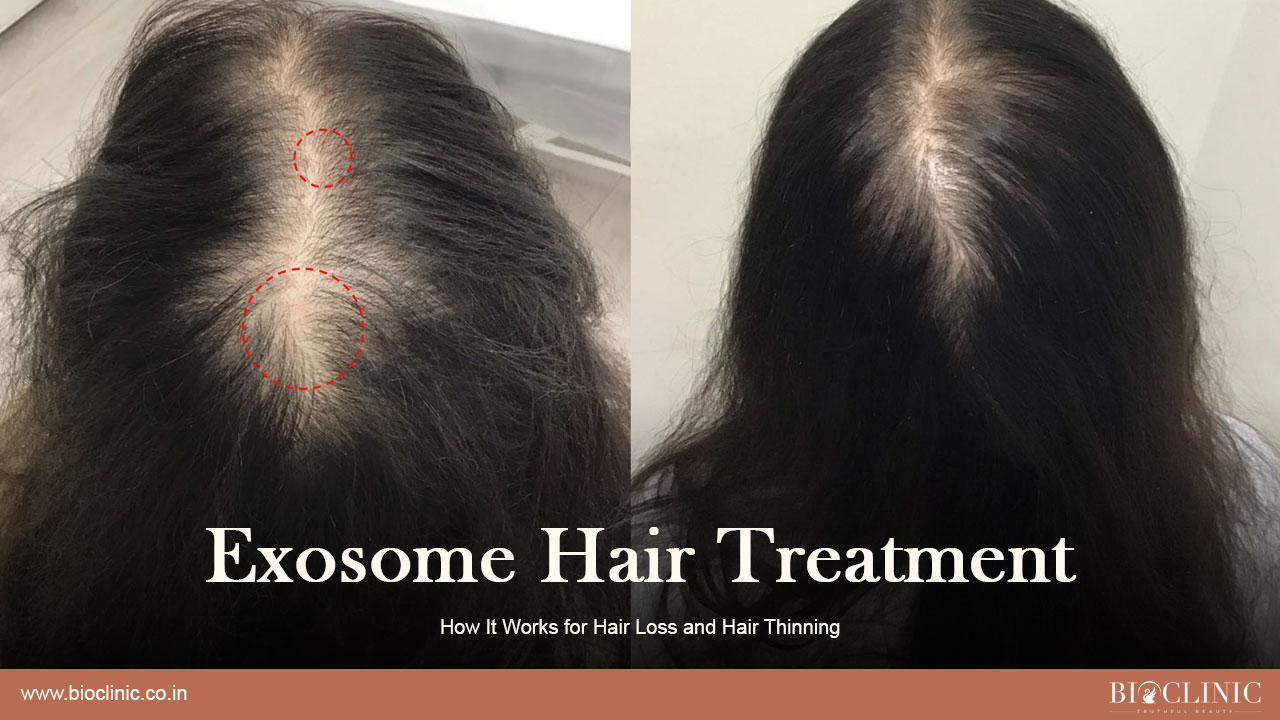
What is exosome hair treatment?
Exosomes are tiny extracellular vesicles released by cells. They contain biological molecules, including proteins, lipids and signalling RNA, that participate in communication between cells.
This cell-to-cell communication is what makes exosomes particularly interesting in regenerative aesthetics.
In hair research, scientists are investigating whether exosome-derived signalling can influence the environment around hair follicles, support follicular activity and encourage healthier hair growth.
Pretti Singh describes the concept simply: exosomes work by sending “repair messages” to the hair follicles.
The science behind this approach is still developing. A 2025 systematic review of clinical studies on exosome treatment found improvements in at least one hair-growth parameter across the studies analysed, including hair density and hair thickness. However, the researchers also highlighted differences between exosome sources, formulations and treatment protocols, meaning the evidence should be considered promising rather than conclusive.
How does exosome hair treatment work?
Hair growth depends on a complex biological environment surrounding the follicle. When that environment is affected, hair may gradually become thinner, weaker or less dense.
Exosome therapy is being studied because extracellular vesicles can carry signalling molecules that influence cellular behaviour.
The proposed effect is therefore not simply cosmetic. Rather than coating the existing hair shaft, the treatment aims to support the biological environment around the follicle.
Research has investigated several potential mechanisms, including effects on dermal papilla cells and signalling pathways involved in follicular growth and regeneration. However, much of the science remains at the preclinical or early clinical stage, and researchers continue to call for larger and better-controlled studies.
This is why exosome hair treatment should be viewed as an emerging regenerative approach, rather than an instant solution for hair loss.
What does a practitioner look at before recommending exosome therapy?
This is one of the most important questions to ask before undergoing any hair-loss treatment.
Hair fall is not a single condition. It can be associated with hormonal changes, nutritional deficiencies, illness, stress, genetics and other underlying factors.
Pretti Singh particularly identifies women going through perimenopause and menopause as people who may experience changes in hair density. She also sees hair fall in people recovering from illness.
However, being in one of these groups does not automatically mean exosome therapy is the right treatment.
The pattern, duration and likely cause of hair loss should be considered before choosing a regenerative treatment. Sudden, severe or patchy hair loss may require medical evaluation to identify the underlying cause.
BioClinic's broader philosophy also reflects this emphasis on assessment before intervention. The clinic describes its approach as personalised care for individual skin and hair needs rather than a one-size-fits-all treatment model.
Exosome hair treatment vs PRP: which is better?
Exosomes and PRP are often discussed together because both are considered regenerative approaches to hair restoration, but they are not the same treatment.
PRP, or platelet-rich plasma, is prepared from the patient's own blood and uses concentrated platelets and associated growth factors. Exosome therapy, on the other hand, uses extracellular vesicles intended to deliver cell-signalling molecules.
So which is better?
There is currently no scientifically justified answer that makes exosomes universally superior to PRP.
In fact, BioClinic's own article comparing exosomes, PRP and polynucleotides makes this distinction clearly: PRP currently has the strongest published evidence for hair restoration, while exosome therapy is newer and its clinical evidence base is still developing.
Pretti Singh describes exosomes as a potentially less cumbersome regenerative option and has observed visible new hair growth among BioClinic clients. Her clinical experience is valuable, but individual results should not be interpreted as a guarantee of the same outcome for every patient.
The better question is not “Which treatment is trending?” but “Which treatment is appropriate for this particular type of hair loss?”
What happens during an exosome hair treatment?
The exact procedure can vary depending on the product and delivery method.
At BioClinic, Pretti Singh describes the hair treatment as involving a mild stamping device to deliver the treatment to the scalp.
Because the scalp is being treated directly, some discomfort can be expected.
According to BioClinic's treatment protocol, clients are advised to:
• Expect some mild pain or discomfort during treatment.
• Avoid combing the hair for approximately 24 hours.
• Avoid washing the hair for approximately 48 hours.
• Be aware that a progressive tingling sensation may occur after treatment.
Following the specific aftercare instructions provided by the treating professional is important.
It is also worth noting that “exosome treatment” does not describe one universally standardised procedure. Delivery methods and formulations differ, and the distinction between topical and more invasive delivery approaches matters when discussing both efficacy and safety.
How many exosome hair treatments are needed?
There is currently no universally established number of sessions for exosome hair treatment.
Protocols differ according to the product used, the delivery method, the patient's condition and the practitioner's approach.
At BioClinic, Pretti Singh's current protocol involves monthly treatments for six months when faster results are desired, followed by a maintenance treatment approximately once every three months.
That should be understood as BioClinic's treatment protocol rather than a universally established clinical standard.
Hair growth itself is slow, so a course of treatment requires patience. A treatment schedule should also be reassessed according to how an individual responds.
How long does exosome hair treatment take to show results?
One of the biggest mistakes people can make with hair-regeneration treatments is expecting an immediate transformation.
Hair grows in cycles, and biological changes around the follicle take time to become visible.
Based on her experience at BioClinic, Pretti Singh says visible new hair growth may be seen at around six months.
BioClinic also combines the in-clinic treatment with home care applied after each wash, with the aim of supporting hair density as part of a longer-term approach.
The published evidence similarly suggests that outcomes should be assessed over time rather than immediately after treatment. Clinical studies have reported improvements in hair density and thickness, but the number of studies remains limited and protocols vary considerably.
Who may be a candidate for exosome hair treatment?
According to Pretti Singh, women experiencing hair changes during perimenopause or menopause may be among the people who could benefit from considering regenerative hair treatments.
She also identifies people who have recently recovered from illness and subsequently experienced hair fall or thinning.
But candidacy should not be determined by age or life stage alone.
A proper assessment should consider the pattern and history of hair loss, possible contributing factors and whether exosome therapy is an appropriate option.
If hair loss is sudden, patchy, rapidly progressing or accompanied by scalp inflammation or other symptoms, identifying the underlying cause should come before choosing an aesthetic treatment.
Is exosome hair treatment safe?
The evidence so far is encouraging, but it is too early to describe exosome hair treatment as completely risk-free.
A 2025 clinical review found that side effects were uncommon in the nine hair-loss studies it examined, involving 125 patients. However, the authors also noted serious adverse events reported elsewhere in the broader field of exosome-based dermatological treatments.
There is another important consideration: exosome products are not necessarily identical. Their biological source, preparation, formulation, quality control and method of delivery can differ.
This makes the choice of practitioner and treatment protocol particularly important.
Patients considering exosome therapy should ask what product is being used, where it comes from, how it is administered, what evidence supports that specific approach and what aftercare is required.
What results can you realistically expect?
The goal of exosome hair treatment is to support a healthier environment for hair growth rather than create an overnight cosmetic transformation.
Pretti Singh's experience at BioClinic is that visible new hair growth can become apparent over approximately six months, with treatment combined with a suitable home-care routine.
Published research provides an encouraging signal: clinical studies have reported improvements in hair density and thickness following exosome-based interventions. But the current evidence does not justify promising identical results to every individual.
That distinction matters.
A regenerative treatment can be promising without being a guaranteed treatment.
Takeaway
Exosome hair treatment is one of the newer regenerative approaches being explored for hair loss and thinning. Its appeal comes from the possibility of using extracellular vesicles and their signalling molecules to influence the biological environment surrounding the hair follicle.
Early clinical research is encouraging, with studies reporting improvements in measures such as hair density and thickness. At the same time, exosome therapy remains an evolving field, with differences in products and protocols and a need for larger, better-designed clinical trials.
For someone considering exosome hair treatment in Kanpur, the important question should therefore not simply be whether the treatment is available. It should be whether it is appropriate for the individual's pattern and cause of hair loss.
At BioClinic, Pretti Singh's approach begins with understanding the person's hair concern before deciding on a treatment protocol. For women experiencing thinning around perimenopause or menopause, or people noticing hair loss after recovering from illness, that assessment can be particularly important.
Because when it comes to hair loss, choosing a treatment is only half the decision. Choosing the right treatment for the reason behind the hair loss is what matters.
Frequently Asked Questions
How does exosome hair treatment work?
Exosome hair treatment uses extracellular vesicles containing signalling molecules that may influence cellular activity around the hair follicle. Researchers are investigating their potential to support follicular health and hair growth.
How long does exosome hair treatment take to show results?
At BioClinic, Pretti Singh reports that visible new hair growth may be seen at around six months. Individual responses can vary.
Is exosome treatment better than PRP for hair loss?
Not conclusively. PRP currently has the stronger established evidence base for hair restoration, while exosome therapy is newer and still being evaluated.
How many exosome hair treatments are needed?
BioClinic's current protocol involves monthly treatment for six months when faster results are desired, followed by maintenance approximately every three months. This is a clinic-specific protocol, not a universal treatment standard.
Who may consider exosome hair treatment?
BioClinic particularly identifies women in perimenopause or menopause and people recovering from illness as groups who may experience hair thinning that could warrant consideration of regenerative treatment. An individual assessment is still necessary.
Does exosome hair treatment hurt?
Some discomfort can occur. At BioClinic, the treatment uses a mild stamping device, and clients may experience some pain during treatment and tingling afterwards.
Can I wash my hair after exosome treatment?
BioClinic advises avoiding hair washing for approximately 48 hours and combing for approximately 24 hours, subject to the treating professional's individual instructions.
Is exosome hair treatment proven?
The early evidence is promising, but it is still developing. Reviews of clinical studies have reported improvements in hair-growth measures, while also highlighting the need for larger studies and greater standardisation.
Can exosome treatment regrow hair permanently?
There is currently insufficient evidence to promise permanent hair regrowth. Results depend on the underlying cause of hair loss, individual response and the treatment protocol.

Updated on: 10 Sep 2026